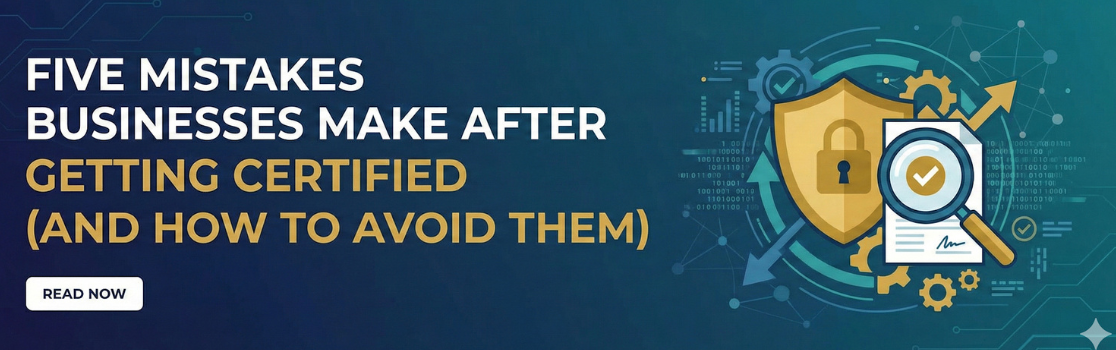
Achieving an ISO certification is a big milestone; honestly, it’s one of those achievements that makes teams feel proud, relieved, and slightly overconfident at the same time. After all, a certification means your processes work, your people follow standardized systems, and your business is officially aligned with global quality expectations. But here’s the twist almost nobody talks about: getting certified is not the finish line. It’s more like the starting point of a long, continuous improvement journey.
Many companies unintentionally slip into practices that weaken everything they built during the certification stage. Even businesses working with a reputable ISO certification company or operating in regions like ISO certification India face these challenges. This blog highlights the five biggest mistakes organizations make after achieving certification, and how you can avoid falling into the same trap.
One of the biggest mistakes companies make is treating certification like a college diploma, you earn it once and show it forever. But ISO standards don’t work like that. They require ongoing monitoring, updates, internal audits, and performance reviews.
Businesses that stop updating their processes end up drifting away from compliance. This usually becomes a problem during surveillance audits when gaps suddenly appear out of nowhere, and teams scramble to “fix things last minute.”
When working with the right ISO certification company, you’ll get guidance on maintaining compliance year-round instead of just during audits.
You’d be surprised how often this happens. A company earns its certification, celebrates, and moves forward, but then new employees join, and nobody trains them on the actual ISO processes. Over time, the system becomes inconsistent. Old employees follow the rules; new employees “guess” the rules.
In highly competitive business environments, particularly in ISO certification India, this inconsistency quickly leads to non-conformities.
Organizations that use ongoing ISO certification services avoid this pitfall because monitoring and employee alignment become part of continuous support.
Documentation is the backbone of ISO. But many companies do this odd thing: they update processes but forget to update documents. Eventually, procedures and documents become completely misaligned.
When auditors walk in, they don’t just check what you do; they check whether what you do matches what you documented. Documentation mismatches are one of the most common points of failure across businesses.
Good ISO certification services usually include document review support, making it easier to stay aligned with standards.
During audits, non-conformities may appear; it’s normal, it’s part of the improvement cycle. The real problem is when businesses ignore corrective actions or treat them like optional suggestions rather than mandatory improvements.
If corrective actions are not resolved, the same issues reappear in future audits, sometimes even bigger than before.
A supportive ISO certification company will help you not only identify non-conformities but also guide you in preventing them from resurfacing.
Some companies keep ISO processes separate from everyday work, kind of like a “parallel system.” Employees follow regular procedures daily and pull out ISO procedures only during audits. This is a recipe for failure.
For ISO to work, it must be woven into the culture. If employees see it as extra work, compliance will fade.
Companies that truly integrate standards into everyday operations experience higher efficiency, smoother workflows, and fewer customer complaints over time.
ISO certification gives your business global credibility, consistent performance, reduced errors, and improved customer satisfaction. But losing that discipline after certification can undo years of effort.
When you stay committed and keep leveraging ongoing ISO certification services, ISO becomes more than compliance. It becomes an operational advantage, a cultural asset, and sometimes, a key reason why clients choose you over competitors.
At KBS Certification, our focus extends beyond simply achieving certification; we enable organizations to sustain excellence with confidence. As a trusted and accredited ISO certification company, we provide continuous, strategic support essential for long-term compliance.
We specialize in meticulous surveillance audit preparation, proactive corrective action guidance, and critical system performance enhancement. For businesses seeking dependable partners for ISO certification in India, our globally recognized ISO certification services guarantee long-term operational consistency and effectiveness.
We also deliver comprehensive ISO Training, ensuring your teams remain fully aligned with standards and everyday process requirements. Whether the standard is ISO 9001, ISO 14001, ISO 45001, or others, we ensure your certified management systems remain effective, reliable, and always audit-ready. We help ensure your commitment translates into a permanent operational advantage.
Maintain documentation, review processes regularly, and continue employee training to ensure long-term compliance and performance.
Most companies stop monitoring processes, skip internal audits, or fail to update documents and employee practices consistently.
ISO processes should be reviewed quarterly or biannually to ensure alignment with operational changes and audit requirements.
Yes, ISO certification shows commitment to quality, consistency, and continuous improvement, which strengthens customer confidence and brand credibility.
For detailed training, certification, sustainability, or climate change services–related queries, please  Contact Us

 SIGN IN TO TRAINING ACADEMY