Climate change isn’t just a topic for scientists or policy nerds anymore. It’s something that can actually hit your business, like, for real. It can disrupt operations, mess with supply chains, push up costs, and even threaten your long-term survival. And for SMEs, the truth is this: building a climate risk management strategy is no longer optional. It’s becoming a must.
But here’s the honest part: many businesses don’t know where to start. It can feel like you’re standing at the edge of a huge forest with no trail. You don’t need to have everything figured out immediately. You can build a solid climate risk strategy step-by-step, and it doesn’t need to be expensive or complicated.
In this blog, I’ll walk you through a simple, practical approach to building a climate risk management strategy. This is grounded in real business needs and meant for companies that are just beginning their climate journey.
Climate risks generally fall into two main buckets:
Physical risks
These are direct impacts from climate events like:
Transition risks
These come from the shift to a low-carbon economy, such as:
And these risks can hit your business in weird ways, like higher insurance premiums, supply chain delays, or losing customers who want greener partners.
So, climate change risk management is not a “future issue.” It’s happening now, and businesses need to act today to stay resilient.
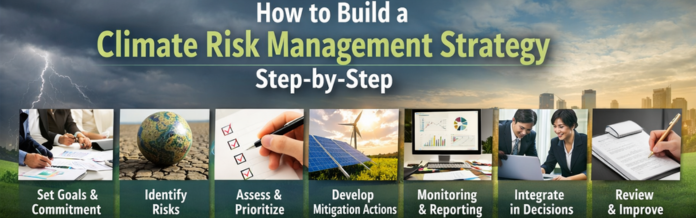
Step 1: Set Clear Goals and Leadership Commitment
The first step is to get leadership on board. Not just “support,” I mean real commitment. Climate risk needs to become a business priority, not just another checklist item.
Here are some practical steps:
Once leadership commits, everything else becomes easier, because decisions start aligning with climate goals instead of resisting them.
Step 2: Identify Your Climate Risks
This is where most companies get stuck. It can feel overwhelming, like you’re trying to find a needle in a haystack. But the key is to start with what matters most.
Ask these questions:
This is where climate risk consulting can help, especially if you don’t have internal expertise. Consultants can structure the process and ensure you’re not missing hidden vulnerabilities.
Step 3: Assess and Prioritize Risks
After identifying risks, you need to assess them and prioritize them. Not all risks are equal. Some need immediate attention, others can wait.
A simple scoring method:
Prioritize risks that score high in impact and likelihood. Those are the ones you should address first. This is the heart of climate change risk management, because it helps you focus on what truly matters.
Step 4: Develop Risk Mitigation Actions
Now comes the action part. For each high-priority risk, define mitigation steps. These should be practical, measurable, and aligned with business goals.
Examples:
A good strategy includes both short-term fixes and long-term investments, because climate risks evolve quickly.
Step 5: Build Monitoring and Reporting Systems
A climate risk strategy isn’t a one-time project. It needs continuous monitoring and reporting. Many companies fail here; they build a plan, then forget about it.
So, practical steps:
This helps businesses stay proactive rather than reactive. And it makes your strategy credible.
Step 6: Integrate Climate Risk into Business Decisions
A strong strategy only works if it becomes part of everyday decision-making. That means:
When climate risk becomes part of your business culture, the strategy becomes real, not just a document.
Step 7: Review and Improve Continuously
Climate risks don’t stay the same. Weather patterns change, regulations evolve, and markets shift. So your climate risk strategy must evolve, too.
A simple review process could include:
This keeps your strategy relevant and prevents it from becoming outdated.
For businesses in India, building a climate risk management strategy can feel more complex due to diverse climate conditions and regulatory requirements. That’s where climate change services in India become important. They help businesses understand local climate impacts, navigate regulations, and develop resilient strategies grounded in local realities.
At KBS Certification, we know building a climate risk management strategy can feel complex, especially if you don’t have in-house expertise. That’s why we support organizations through validation, verification, and assurance services aligned with global frameworks. Our services include carbon footprint verification, greenhouse gas validation, sustainability assurance, ESG assessments, and training.
By partnering with KBS Certification, businesses get credible third-party assurance that their climate risk processes are reliable, transparent, and aligned with global standards. This helps build resilience, improve stakeholder trust, and stay ready for evolving climate expectations.
It’s a plan to identify, assess, and reduce climate-related risks that could impact business operations and growth.
Yes, because climate impacts and regulations are rising, and even small disruptions can hurt SMEs badly.
It depends, but a basic strategy can be built in a few weeks with clear leadership.
Yes, but consultants help structure the process and ensure you don’t miss hidden risks.
At least annually, but quarterly reviews are better, especially when regulations or climate impacts change fast.
For detailed training, certification, sustainability, or climate change services–related queries, please  Contact Us

 SIGN IN TO TRAINING ACADEMY